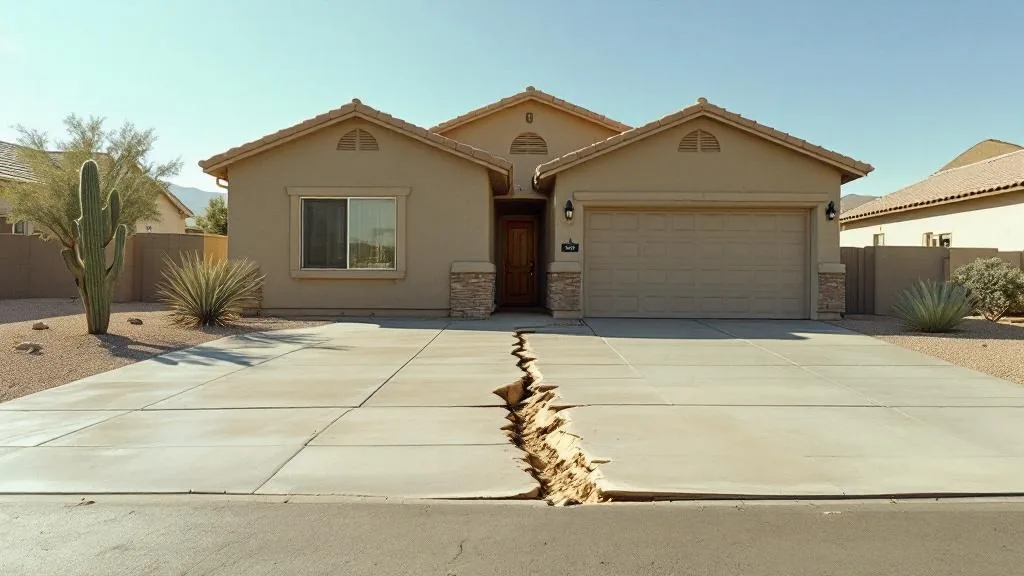
RV pads and large exterior slabs in Phoenix carry concentrated point loads — your RV's tires and tongue jack, a boat trailer's axles, an enclosed trailer's wheels. Settlement under these loads happens when the soil beneath the slab cannot continue supporting the point load. We lift the slab back to level so your rig sits right and your slide-outs work properly.
What we see most
- Pad slope that puts the RV out of level — slide-outs bind, fridge cycles wrong
- Tire-track depressions that are getting deeper each season
- Pad cracking under tongue or hitch weight points
- Exterior slabs that settled toward irrigation lines
- Driveway extensions that dropped at the original-driveway joint
- Boat or trailer pads with one-corner sinking
How we lift RV pads
- Move the rig off the pad and the access route clear
- Map settlement and identify voids beneath the slab
- Drill 5/8" injection points strategically across the affected area
- Inject high-density polyurethane foam — fills voids, lifts pad
- Laser-level the pad to spec or a slight drainage pitch
- Patch holes flush and clean
- Park your RV back on it the same day
Why foam, not replacement
Replacing an RV pad takes several days, costs three to five times more, and rebuilds the slab on the same lightly compacted soil that failed in the first place. Foam injection compacts the soil during expansion, fills the void, and reaches full strength in 15 minutes — your RV is back on it the same day.
Cost
Most Phoenix RV pad lifts run $800–$2,500. Boat pads, trailer pads, and similar exterior slabs are priced the same way — by area and severity. Replacement of a typical 12x40 RV pad runs $5,000+.