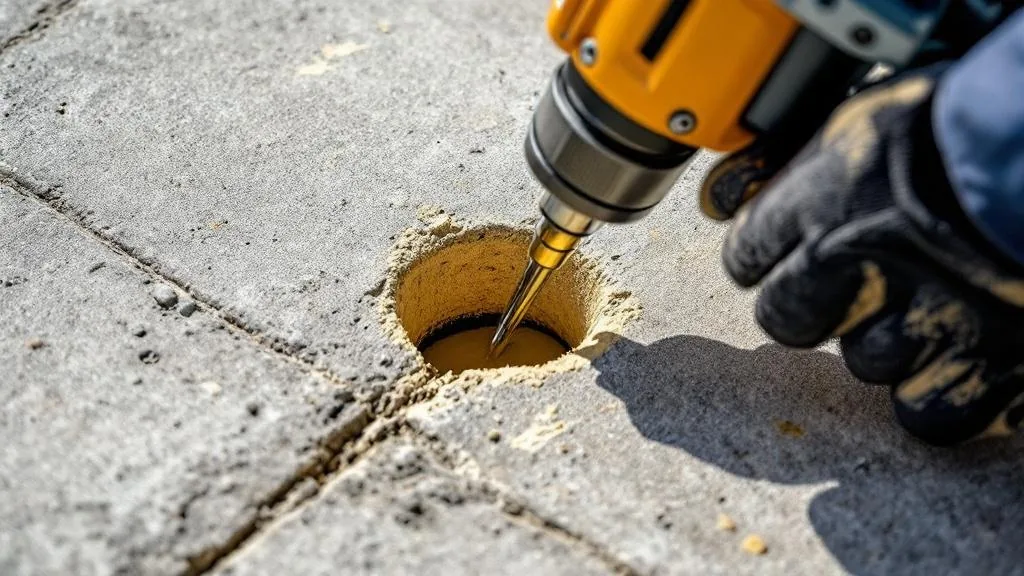
Both methods raise sunken concrete by pumping material under it. That is where the similarity ends. The right tool for the job depends on the slab, the soil, the schedule, and the long-term durability you need. For nearly every job in the Phoenix metro, polyjacking (polyurethane foam injection) is the better tool.
The full comparison
Where mudjacking still has a place
We are not anti-mudjacking. There are jobs where the additional mass of cement slurry is fine, the budget for material is tight, and the schedule allows a full cure cycle. Older industrial slabs, certain agricultural pads, and a few specialty applications can be cost-effective with mud. Most Phoenix residential and commercial concrete is not in that category.
Why polyjacking dominates in Phoenix
- Soil. Phoenix expansive clay and caliche need a material that compacts loose soil and resists water. Foam expands into the void, presses soil tight, and stays waterproof.
- Heat. 110°+ summers do not faze closed-cell foam — its dimensional stability range is far beyond ground temperatures.
- Schedule. Most Phoenix homeowners cannot have their driveway out of service for 48 hours. Foam cures to 90% in 15 minutes.
- Hole size. 5/8" patches in your driveway disappear. 2" patches do not.
- Pool decks. Adding 100+ lb/cf of mud above pool plumbing is risky. Foam at 2–4 lb/cf is not.
The bottom line
For the overwhelming majority of Phoenix concrete repair jobs — driveways, pool decks, sidewalks, garage floors, patios, warehouse floors, foundation leveling — polyjacking with high-density polyurethane foam is faster, cleaner, more durable, and (despite higher per-cubic-foot material cost) often cheaper at the bottom line because of how efficiently it fills voids and lifts per pound.