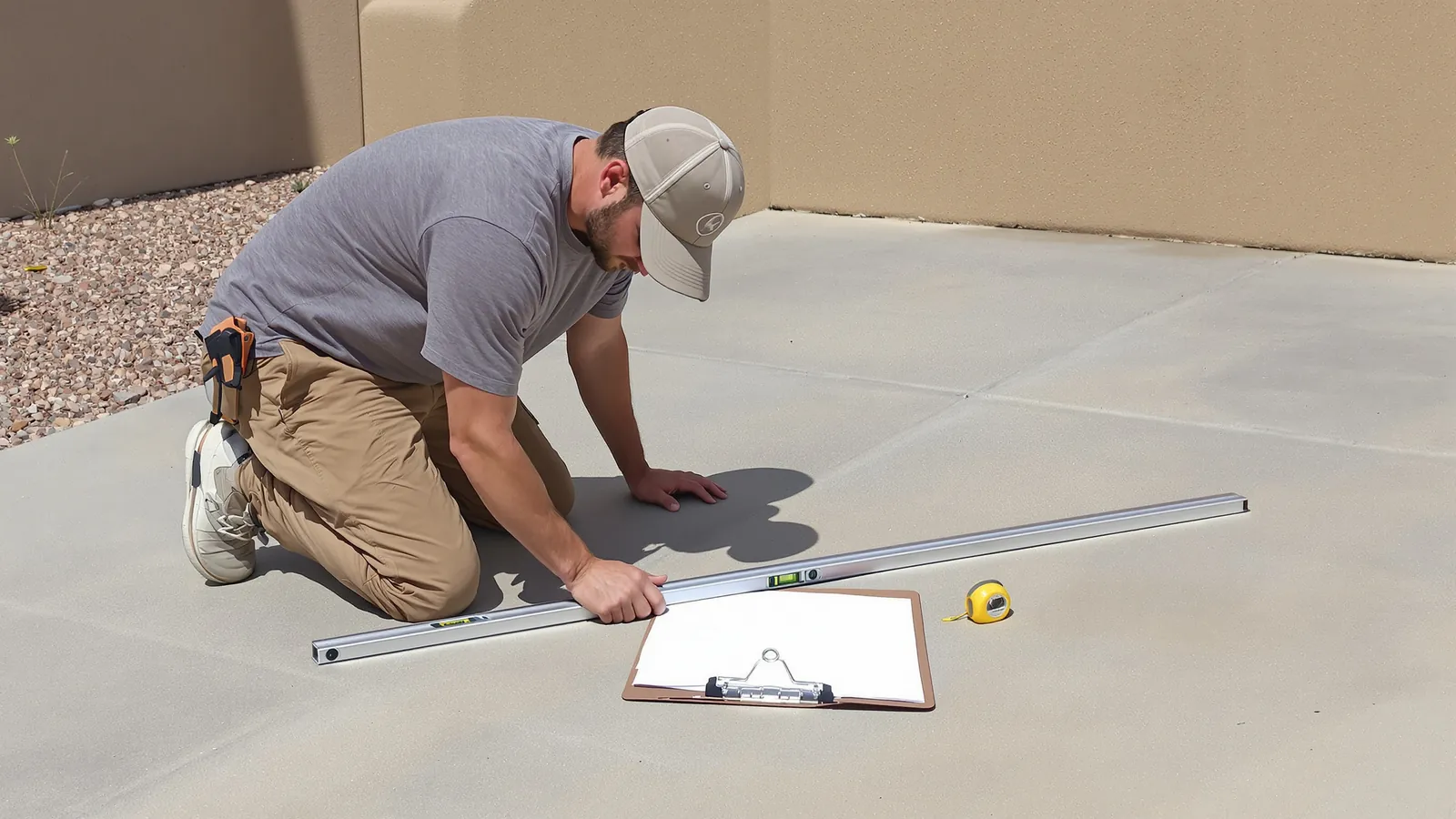
What We Repair
- Structural and cosmetic cracks in slabs, foundations, and walls
- Spalling and surface deterioration (flaking, pitting, scaling)
- Voids beneath concrete that haven't caused visible settlement yet
- Joint deterioration and failed caulking
- Settlement cracks that need both repair and leveling
Why Concrete Cracks in Phoenix
The heat-and-monsoon cycle puts enormous stress on concrete. Thermal expansion during 115° days followed by contraction during cool nights creates micro-stresses that accumulate over years. Add soil movement underneath and tree root pressure, and cracks are inevitable.
The key is addressing them early. A hairline crack today can become a structural issue next monsoon season when water gets in and accelerates erosion underneath.
Crack Repair by Severity
Hairline (under 1/16")
Usually cosmetic. Often caused by normal curing shrinkage or minor thermal movement. Worth monitoring but rarely urgent.
Moderate (1/16" to 1/4")
Could be cosmetic or early structural. If they're growing or visible on both interior and exterior, they should be evaluated.
Wide (over 1/4")
Structural concern. These typically indicate foundation movement and should be assessed promptly. The crack itself needs repair, but more importantly the cause needs to be identified and addressed.
Methods We Use
For structural cracks in flatwork, we use epoxy injection to bond the concrete back together at full strength, then address the underlying cause (usually soil movement or voids). For cosmetic cracks, we use flexible sealants that accommodate minor movement and prevent water intrusion. When a crack signals movement in the home itself — door frames out of square, drywall cracks growing each season, gaps at wall-to-ceiling joints — that is structural foundation work, not flatwork repair. We do both, but the diagnosis, scope, and pricing are different.
Void Filling — The Hidden Repair
You can't see a void under your concrete, but you might feel it: that hollow sound when you tap the surface, or the slight bounce in a slab that should be solid. We inject polyurethane foam into the void to provide permanent support — often before the concrete starts sinking. It's one of the most cost-effective preventive measures you can take ($500–$2,000 typical).