Tempe is the Valley city that ran out of land. It is boxed in on every side by Phoenix, Scottsdale, the Salt River Pima-Maricopa Indian Community, Mesa and Chandler, so there was never a suburban fringe to keep expanding into. The neighborhoods north of the US 60 are the oldest part of the city: postwar tract housing poured on Salt River alluvium, back when subgrade prep meant scraping the lot and setting forms. South Tempe filled in later, on irrigated farm ground below the Western Canal that got subdivided from the early 1970s into the 1990s. Then the outward growth stopped, and nearly every project since has been infill on a lot that already had something standing on it. That is why Tempe foundation work looks nothing like work out on the metro's edge. We are not chasing fresh fill settlement here. We are dealing with slabs that have been through decades of wetting and drying, and with the plumbing that ran underneath them the whole time.
What we fix in Tempe
- Foundation repair — differential settlement in the pre-1980 stock north of the US 60, where slabs went down on Salt River alluvium with almost no subgrade preparation
- Foam injection leveling — the method that does most of the work in Tempe, because it fills and lifts from small holes without trenching a mature lot or dragging equipment down a narrow 1960s side yard
- Stem wall repair — the item we get asked about most on older Tempe houses. Decades of irrigation and lawn watering against the footing corrodes the rebar and pops the concrete face off
- Concrete crack repair — aging driveways, walks and patios in Maple-Ash, Holdeman, Clark Park and Escalante that have cracked, separated and drifted apart at the joints
- Concrete leveling — raising settled flatwork back to grade so water leaves the house instead of standing at the stem wall, which on a flat Tempe lot is usually the whole fix
- Property manager services — a large share of the housing near ASU is renter-occupied, so we schedule through the manager or owner and give tenants notice before anything gets blocked off
Why concrete moves in Tempe
- North Tempe and the 85281 area sit on the historic Salt River floodplain. Alluvial sand, silt and gravel were deposited by shifting channels, so subgrade density can change noticeably across the width of a single house
- The housing north of the US 60 is largely postwar and pre-1980: conventional reinforced slabs, no post-tension, and very little engineered subgrade beneath them
- Parts of older Tempe still take SRP flood irrigation. Those yards are deliberately flooded to a berm, and on plenty of lots that berm sits within a few feet of the foundation
- Pre-1970 Tempe neighborhoods are largely still on their original clay and cast iron sewer laterals. A slow under-slab leak softens a patch of subgrade for years before anything shows up upstairs
- South Tempe was irrigated farmland below the Western Canal before it was platted, and old buried laterals off that alignment still cross under subdivisions that were fields when the canal was dug
- Indian Bend Wash drains south out of Scottsdale and outfalls into the Salt River at the north edge of Tempe, concentrating monsoon runoff into a narrow corridor that neighborhoods a mile away never see
- Apart from Hayden Butte, Twin Buttes and Bell Butte, Tempe is close to flat. There is very little natural grade to help, so a slab that drops even slightly stops shedding water and starts holding it against the house
- With no open land left to annex, new construction here is infill on lots that were already developed. Old footings, abandoned utility trenches and backfilled pools are frequently still down there under the new slab
What typically fails in Tempe
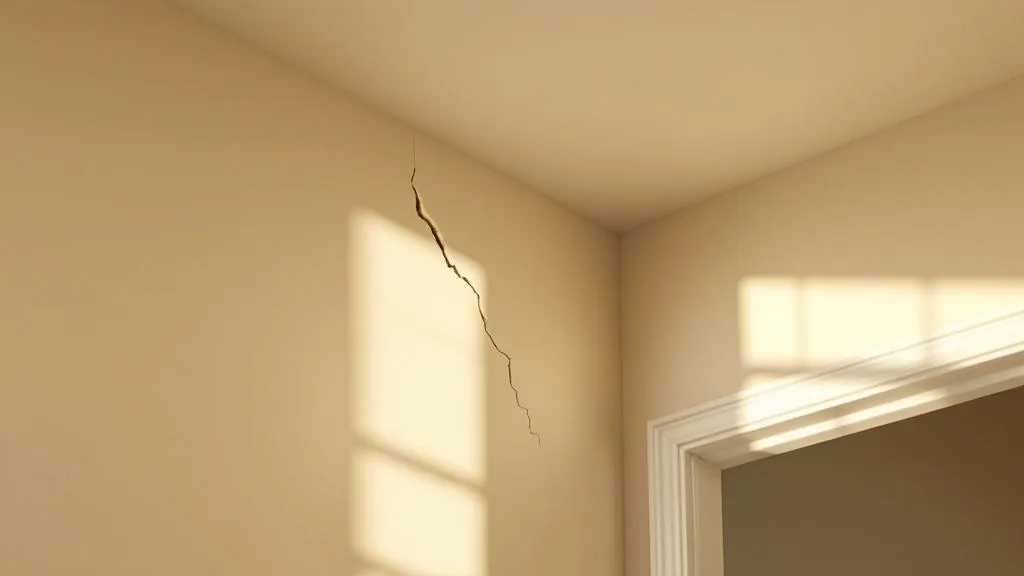
The defining Tempe problem belongs to pre-1980 houses in the central and north neighborhoods: a door that stopped latching, a stair-step crack above a window, and a stretch of stem wall where the stucco has blown off and the concrete underneath is crumbling. Usually three things are stacked on top of one another. The slab is conventional, poured on Salt River alluvium with essentially no subgrade prep. The yard has been flood irrigated or heavily watered against the foundation for most of the life of the house. And the original sewer or water line under that slab is at the end of its service life. We look for the water source first, because on a house of that age in Tempe there almost always is one, and lifting a slab that sits over an active leak buys you very little time. Once the source is dealt with we sound the slab to map the voids, inject polyurethane to fill and lift, and treat the stem wall as its own separate repair.
Common Tempe jobs
- Driveway leveling — narrow 1960s driveways that have dropped at the apron or the garage joint, often right where an old irrigation berm or a sewer lateral runs underneath
- Sidewalk leveling — front walks and side-gate paths in the older central neighborhoods, where panels have settled at the joints and left a lip you can catch a foot on
- ADA trip hazard repair — walkways at apartment complexes, student housing and commercial buildings near ASU and Rio Salado, where a settled joint is a liability item rather than a cosmetic one
- Patio leveling — covered back patios on older Tempe houses that have tipped back toward the slab, so monsoon runoff collects at the door instead of running away from it
- Pool deck leveling — Tempe backyards are full of older pools, and the deck is normally the first thing to drop once the backfill around the shell consolidates
- Pre-sale concrete repair — Tempe homes turn over constantly, and settled flatwork paired with a spalled stem wall is the combination inspectors write up most here
Neighborhoods we serve in Tempe
We cover Tempe and the surrounding Maricopa County communities, including:
- Maple-Ash
- University Park
- Holdeman
- Clark Park
- Mitchell Park
- Broadmor
- Escalante
- Riverside
- Shalimar
- Dava-Lakeshore
- The Lakes
- Warner Ranch
- Circle G Ranches
- Estate La Colina
Tempe ZIP codes served: 85281, 85282, 85283, 85284, 85287.
Nearby service areas
Working somewhere else in the Valley? We also cover Mesa, Chandler and Phoenix.