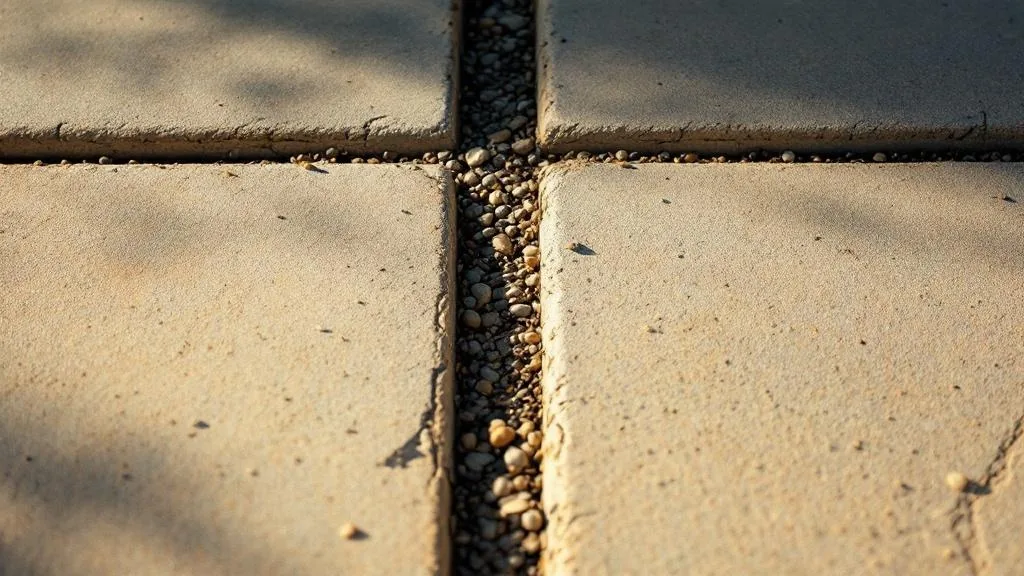
A sidewalk slab that has settled even half an inch is a real liability — for homeowners, HOAs, property managers, and any commercial property with public access. We fix it the right way: lift the slab back to flush with the next, no saw-cutting, no replacement, no closing the path.
The legal exposure side of it
Most municipal codes and ADA accessibility standards consider a vertical offset of 1/4" or greater between adjacent sidewalk slabs to be a trip hazard. Once it is documented (by a slip-and-fall claim, an inspector, or a public complaint), the clock starts. Lifting the slab back to flush is faster, cheaper, and less disruptive than tear-out — and it eliminates the hazard.
How we lift sidewalks
- Map the offset and identify the settled slab
- Drill penny-sized (5/8") injection holes through the settled slab
- Inject polyurethane foam — it expands, fills the void, lifts the slab
- Laser-level the lift so the slab matches its neighbor exactly — flush, no overshoot
- Patch the holes flush with the surface
- Walkable in 15–30 minutes
Where we lift sidewalks most
- HOA common-area sidewalks and walkways
- Apartment complexes and condo communities
- Commercial entrances, retail strip walkways
- Residential front walkways and side gates
- Park, recreation, and public-facing walkways (private)
This page covers residential and HOA sidewalk lifts — visible repair, faster scheduling, simpler scope. For commercial ADA-compliance trip-hazard repair (retail entrances, multifamily walkways, storefront sidewalks with documented complaints), the workflow includes ADA §302 surface-tolerance verification and written compliance documentation — quoted under a separate scope.
Why sidewalks settle in Phoenix
Sidewalks are thin (typically 4") and sit on whatever fill was there during construction. In Phoenix that often means lightly compacted clay, caliche, or sandy fill. Add 100°+ summers, irrigation that runs along the sidewalk, and tree roots that can both lift slabs and erode the soil under them — and you get the offsets we see every day.
Cost
Residential sidewalk lifts run $400–$1,200. HOA and commercial runs are quoted by linear foot — typically 60–80% less than saw-cut-and-replace, and we are off the property in hours instead of days.