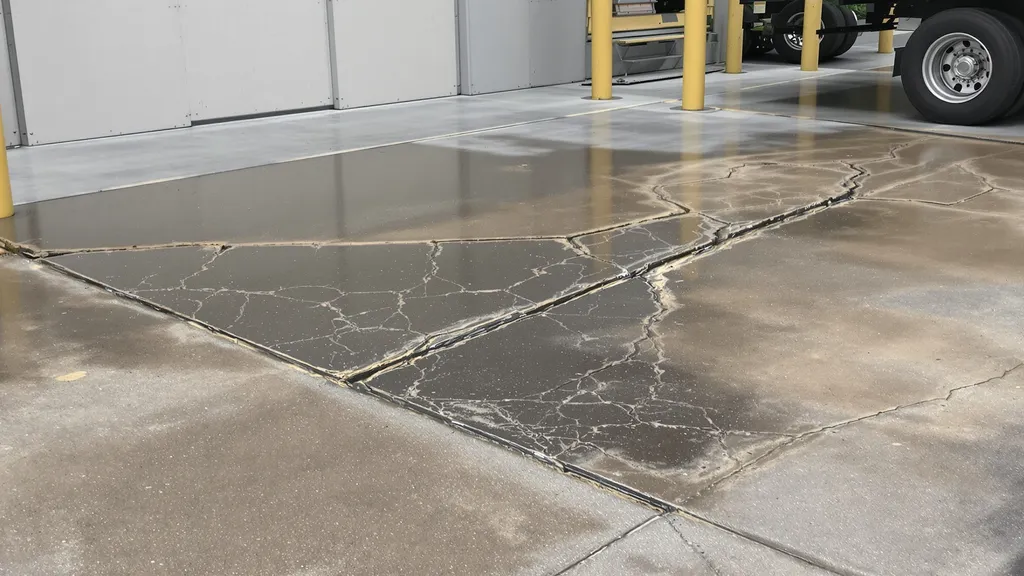
A loading dock that has settled an inch costs you forklift cycle time, broken dock plates, damaged product, and ongoing wear on every truck that backs in. We lift the dock slab and the approach back to spec, in hours, without taking the rest of the operation offline.
What we fix at loading docks
- Settled approach apron — truck arrives at wrong grade for dock plate
- Sunken dock floor inside the building — forklift rolls down into the bay
- Dock plate breaking from constant flex over the settlement
- Bumpers no longer aligning with truck height
- Drainage failure at the dock door — water sits at the threshold
- Concrete cracks at the dock leveler pit edges
How dock lifts work
- Map the slab — measure settlement at the approach, apron, and dock floor
- Drill 5/8" injection points across the affected area
- Inject high-density polyurethane foam — fills voids, lifts slab
- Laser-level the lift to restore proper grade for dock plate operation
- Patch the holes flush — surface restored
- Truck back in the bay the same day
Why foam over slab replacement at a dock
Replacing a dock slab means demolishing it, demolishing the leveler pit walls if they are tied in, pouring new concrete, waiting for cure, and reinstalling the leveler. Most operations cannot afford the dock to be out for a week. Foam injection completes in hours, costs a fraction of replacement, and is engineered to handle dock-load capacity.
Phasing across multi-bay facilities
For multi-bay loading dock facilities, we phase the work — one bay at a time, off-shift or in slow windows — so trucks keep moving through the operation. We coordinate with the warehouse manager and any third-party logistics tenants to schedule around your peak windows.