Foundations talk. They send signals up through your walls, doors, floors, and exterior block — and most of those signals are visible if you know what to look for. Here are the five most reliable signs your Phoenix-area home foundation needs attention.
1. Stair-step cracks in exterior block or stucco
Look at the exterior of your home where you can see the original block or where stucco covers the block. Stair-step cracks running diagonally — following the mortar joints between blocks — are the classic signature of differential foundation settlement. The crack is following the path of least resistance through the masonry as one part of the home drops relative to the rest.
Hairline stair-step cracks under 1/16" are usually OK to monitor. Anything wider, or anything that grows over a few months, is worth getting a free assessment on.
2. Doors and windows that suddenly stick or won't latch
Phoenix homes typically have aluminum or vinyl windows and prehung interior doors set into wood or metal frames. When the foundation moves, the framing racks slightly out of square — and the doors and windows stop working. If you have a door that adjusters keep "fixing" but it sticks again every few months, foundation movement is a likely culprit.
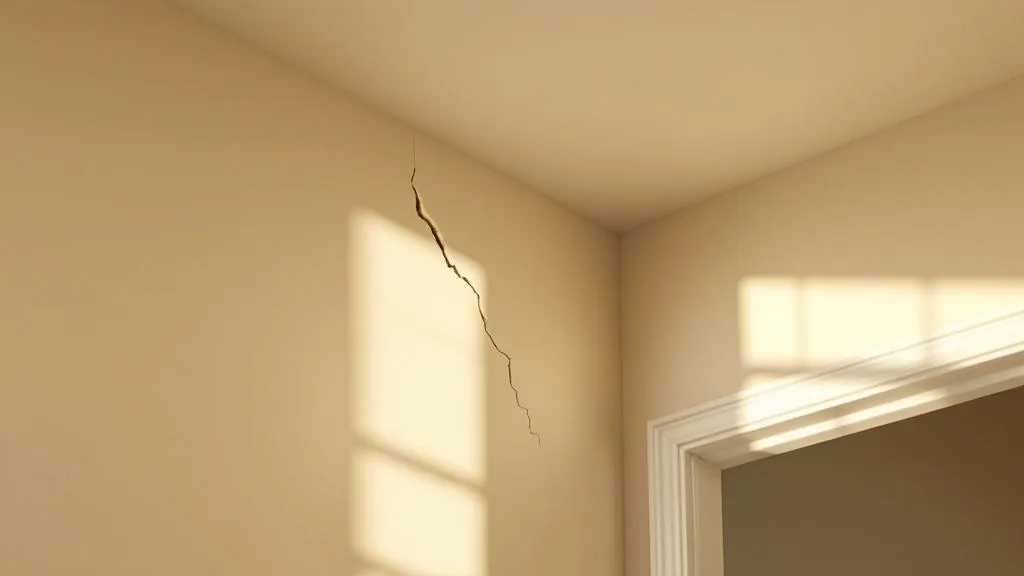
3. Diagonal cracks in interior drywall above doorframes
The corner of a doorframe is where stress concentrates when the foundation moves. The crack typically runs from the upper corner of the door diagonally up toward the ceiling. Drywall cracks alone can have other causes (settlement of newer construction, drywall mud shrinkage), but combined with exterior or other interior signs, they confirm foundation movement.
4. Sloping floors
Set a marble on the floor in different rooms. Or use a 4-foot level. If the floor pitches more than about 1.5% over a 4-foot span, you have measurable foundation movement. In Phoenix, this often shows up as a noticeable slope in tile, an oddly stuck refrigerator door, or a dishwasher that won't drain properly because it isn't level anymore.
5. Gaps where wall meets ceiling or wall meets floor
A clean gap appearing where the drywall meets the trim or where two pieces of trim used to butt together is a sign that the wall is moving down (or up) relative to a floor or ceiling that is not. Most often, the wall is following the foundation as it settles.
Bonus: what to check on the exterior concrete
- Driveway sloping toward the garage instead of away from it
- Patio sloping toward the house
- Cracks running across the slab perpendicular to the house (settlement)
- Visible drop where the patio or driveway meets the house
- Pool deck pulling away from the coping
What to do if you see these signs
Foundation problems do not get better on their own — but they often get fixed with polyurethane foam injection for a fraction of what people fear. Get a free assessment. We will tell you exactly what is going on, what it will take to fix, and what it will cost.